
Injera
Quick, easy, tender, crepe-like injera is pleasantly sour, slightly sweet, and utterly addictive. Wrap it, dip it, or enjoy it as is for African comfort food.
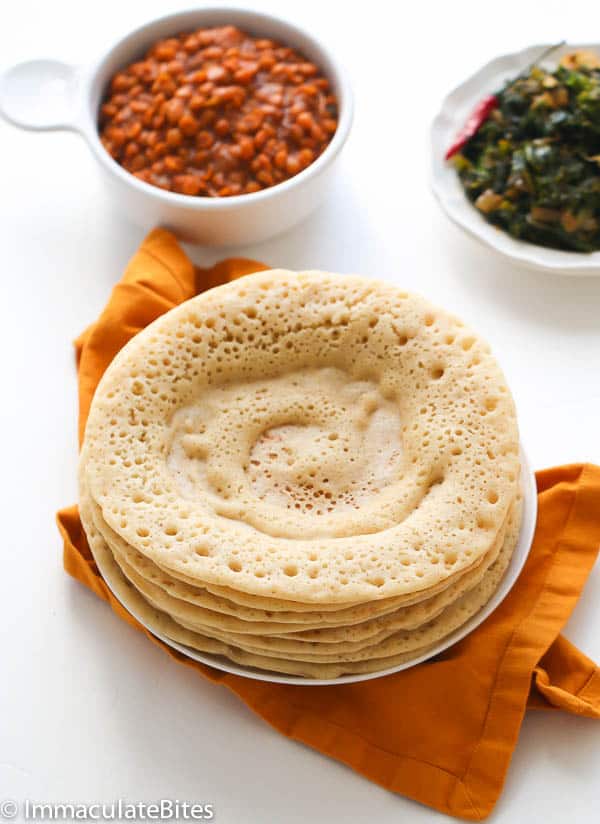
I remember a time (my broke and ignorant college days) when I begrudgingly ate injera at least once a week. You see, my roommate was from Ethiopia and couldn’t have a meal without it. Why would anyone pick sour, spongy bread over a fresh baguette? Sadly, at that time, I didn’t get it.
And to rub salt in the wound, 9 times out of 10, she would pick an Ethiopian restaurant when it was her turn to pick out a place to eat. I just couldn’t bring myself to say no because she was really sweet. It kept her going because she was really homesick.
But then something amazing happened. After eating it so many times, it started growing on me. To this day, I take time out to go to my favorite Ethiopian restaurant to pick up a plate of food with injera. Unfortunately, my family doesn’t get it, so I’ve never attempted to make it at home until now.
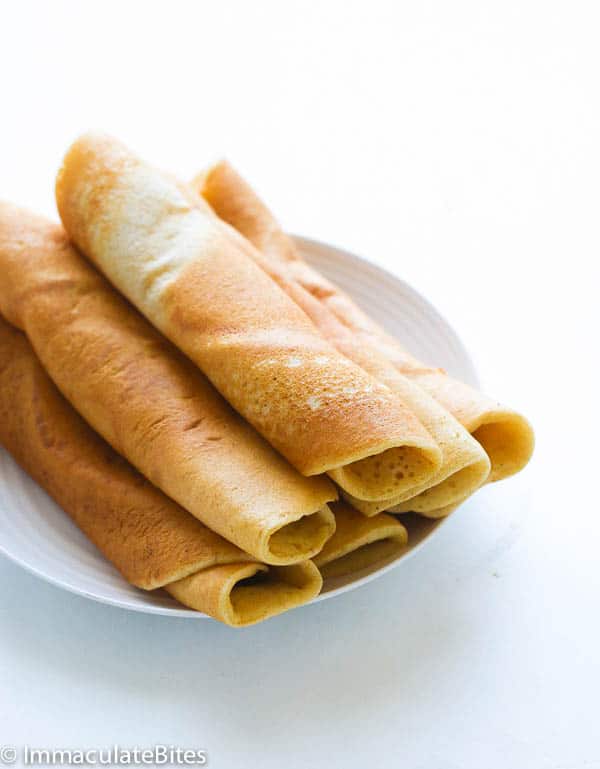
What Is It?
Injera is a crepe-like flatbread with a unique, slightly spongy texture thanks to natural fermentation (also known as sourdough). It’s never missing at mealtime in Ethiopia, Eritrea, Somalia, Yemen, Djibouti, and Sudan, with each country having its own variation. The Ethiopian version is usually made with teff flour, but barley, sorghum, and wheat flour also work.
I’m not going to lie, making authentic injera with teff flour is not for the faint of heart. I tried several variations and compared them to restaurant-quality injera. However, it was just too tedious and involved, even for a seasoned cook. So I’m presenting the Somalian version, which is usually called canjeero or lahooh, and using regular yeast. Sometimes, good enough is better than authentic, and it even got a thumbs up from hubby.
How to Make Injera
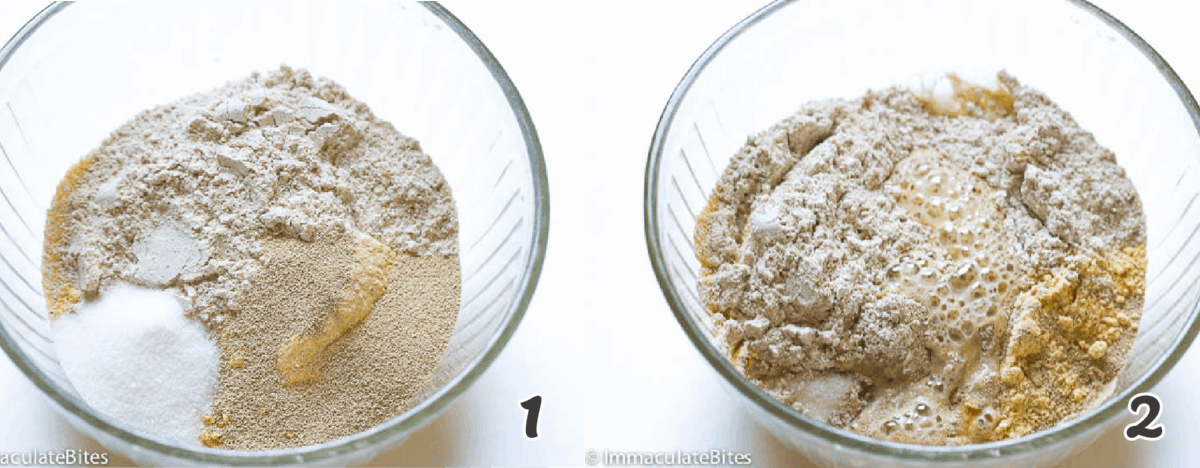
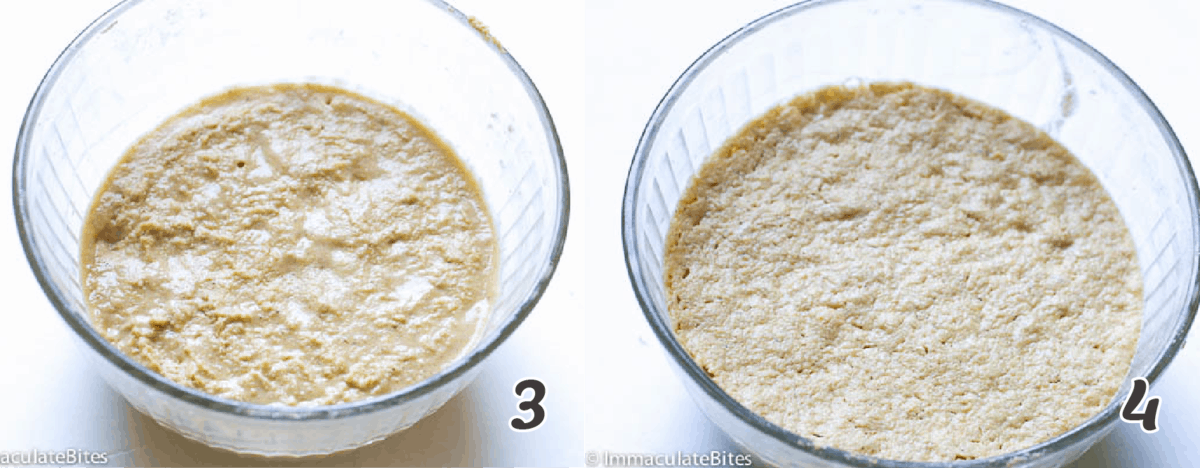
- Make the starter and let it ferment.
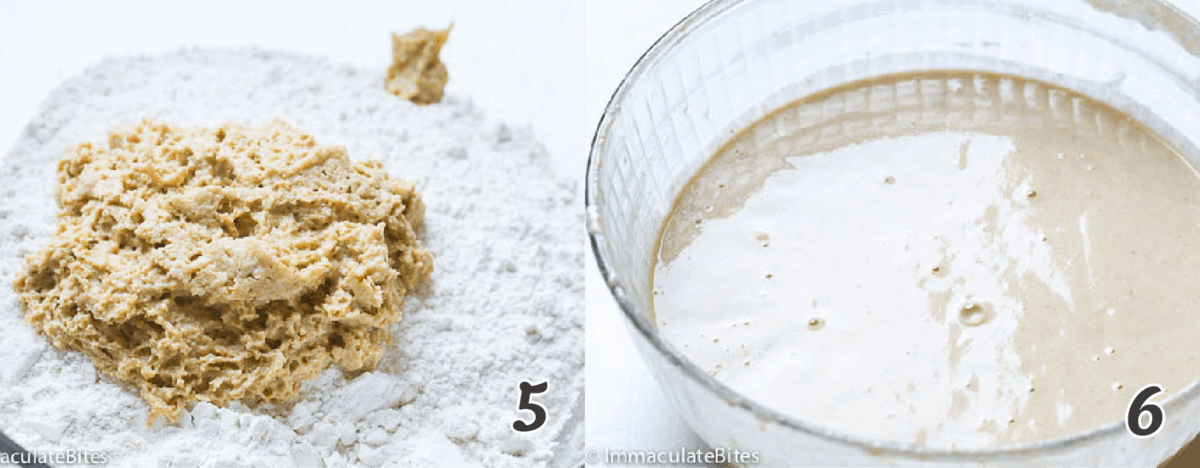
- Mix the dry ingredients, add the starter mixture, then add water a cup at a time, stirring constantly, until you have a thick crepe-like batter or thin pancake batter.
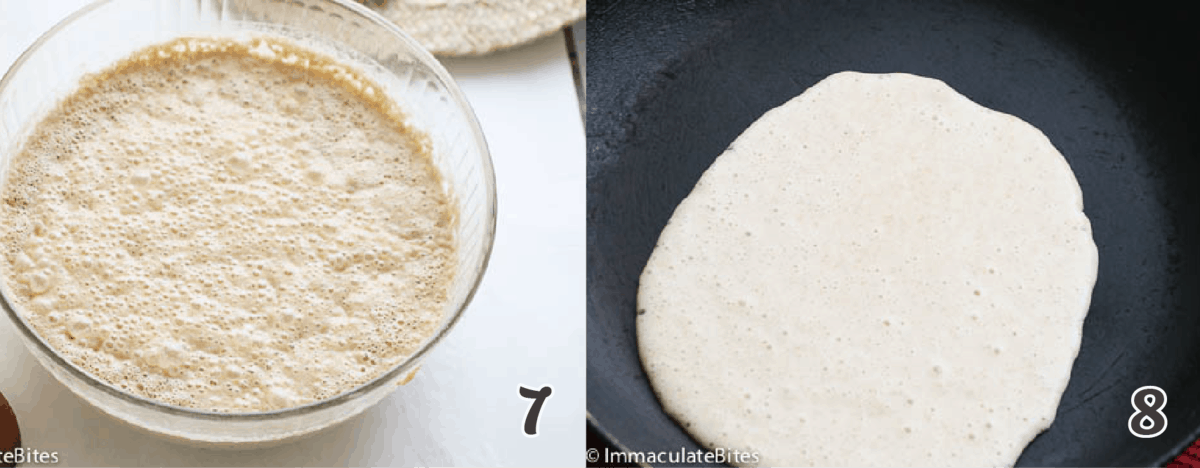
- Let it rise for about 2 hours, heat a crepe pan, and pour in a portion of batter.
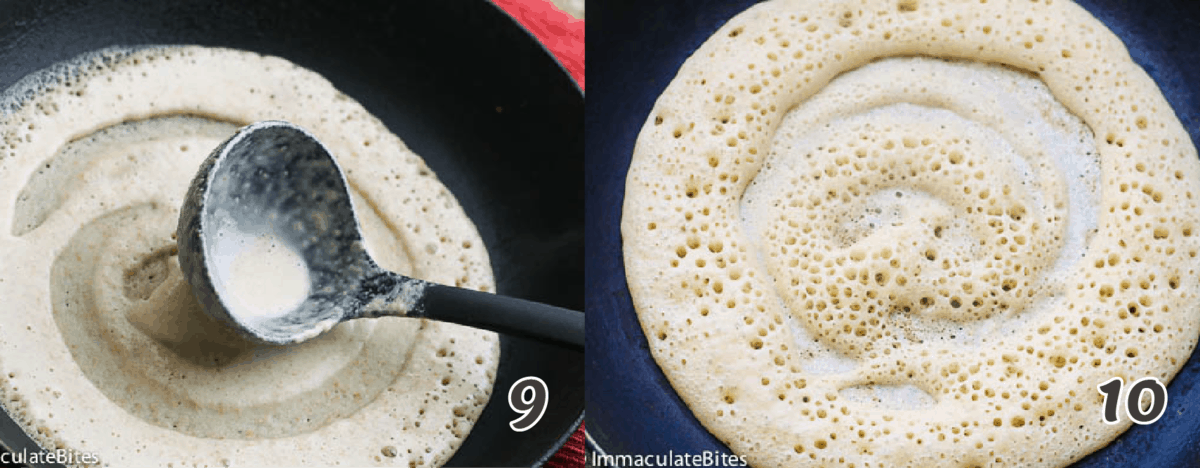
- Spread the batter, cover with the lid, and let it cook until all the batter forms little brown spots coming through.
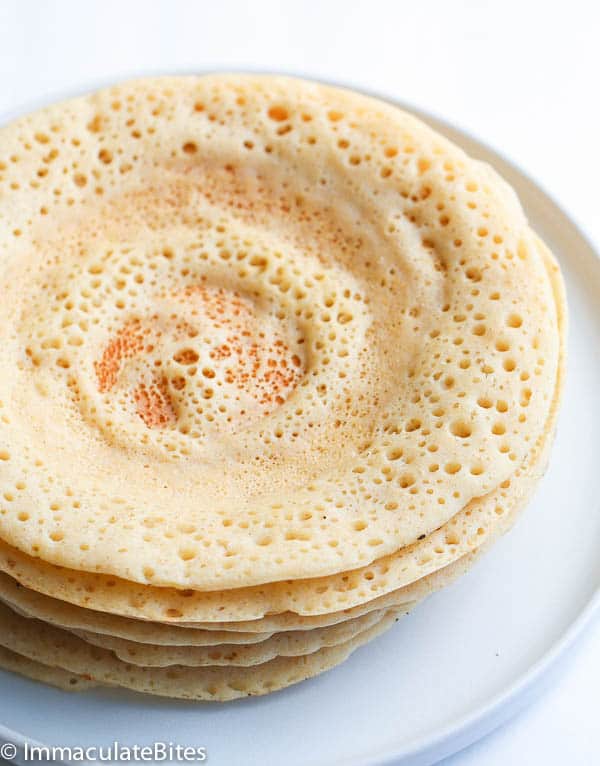
I adapted my recipe from the one that the lovely couple at Vegan Magic shared. Do check them out if you want to learn how to make more delicious Somali recipes.
Gluten-Free Injera
For authentic Ethiopian injera, mix 2 cups of teff flour (or 1 cup each of teff and barley flour) with 3 cups of water, cover it with a kitchen towel, and let it ferment for 3-5 days. The batter should be bubbly and smell slightly sour, but no mold. Mix it well, then boil ½ cup of batter with a cup of water until it thickens. Then mix that back into the batter and cook it the usual way.
Recipe Notes
- This is a great introduction into the world of sourdough, and anyone can make it-scout’s honor. And you don’t need a special pan, just make sure it’s non-stick.
- For those who enjoy the sour taste, you can let it ferment longer, then keep it in the fridge until the next day.
- A friend of mine prefers getting whole grain teff, mixing all the ingredients in the blender, letting it ferment for a day or two, then cooking as usual. You can also add a sourdough starter and let it ferment until the next day.
Make Ahead Instructions
Injera can be kept at room temperature for up to 5 days or in the fridge for up to 2 weeks. I keep mine in a ziplock bag to keep it from drying out.
How to Eat Injera
An added bonus is that you can sweeten things up with cinnamon sugar, honey, and spiced butter. Then enjoy it for breakfast, a snack, or dessert. Believe me, you are not going to want to stop.
A great flatbread to have on hand when making doro wat. BOY! The two together are DIVINE! Injera is also fantastic for sopping up the juices in lentil stew, collard greens, and cabbage.
More Fabulous East African Recipes
Enjoy these recipes for a traditional East African dinner.
By Imma
This blog post was originally published in October 2015 and has been updated with additional tips and tempting photos.
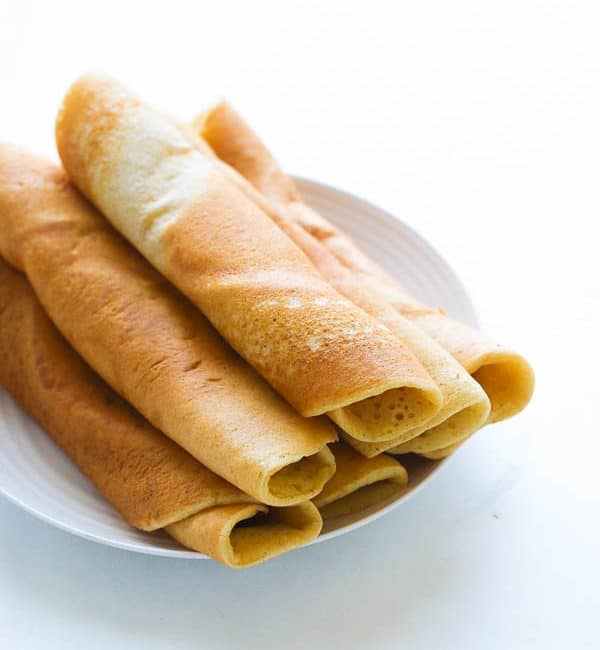
Injera
Ingredients
Starter
- 1 cup (120g) corn flour or a fine cornmeal (not cornstarch)
- ½ cup (70g) sorghum or whole wheat flour
- 1 tablespoon (12g) sugar
- 1 tablespoon (9g) dry yeast
- 1¼ cups (295g) warm water
Injera
- 4 cups (480g) all-purpose flour
- 2 tablespoons (24g) baking powder
- 2 teaspoons (12g) salt
- ¼ cup (50g) sugar (optional)
- 4 cups (944g) warm water
Instructions
Easy Yeast Method
- Make the starter by combining corn flour, sorghum or whole wheat flour, sugar, yeast, and water, mixing, and letting it rise for about an hour.
- Mix the all-purpose flour, baking powder, salt, and sugar. Then add the starter mixture, and start adding water a cup at a time, stirring constantly, until all the water has been used up. Thoroughly mix to eliminate any lumps. You can do this in a blender, then pour it into a large bowl.
- Let it rise for about 2 hours or until bubbles form.
Quick Method
- In a large bowl, combine the flour, baking powder, salt, and sugar. Then start adding water, a cup at a time, stirring constantly to prevent lumps.
- Continue adding water, one cup at a time water until the water is completely used up.
Cooking
- Heat a skillet, crepe pan, or non-stick fry pan with a lid on medium-high heat.
- Pour a ladleful (¾ cup or more) of the injera batter onto the pan, spreading from the center in a circular motion until it’s about the size of a dinner plate. Cover with the lid, and let it cook until all the batter forms little brown spots coming through. No need to flip it.
- Transfer to a plate with a spatula or plate, set aside, and continue cooking until the batter is finished.
Tips & Notes:
- Start adding water, a cup at a time, stirring well between additions to make sure you get a smooth batter.
- Traditionally, injera is made with teff or sorghum flour. However, whole wheat and barley flour work as well.
- Keep in mind that humidity, flour, and water play a role. Injera should be thicker than a crepe, but not as thick as a traditional American pancake.
- For the quick version, feel free to replace the flour, baking powder, and salt with the same amount of self-rising flour.

I’ve made this recipe many times – my family and I love the taste and it is so easy! Thank you
You’re welcome, Laura :)!
How to keep it? In the fridge or on the counter?
Hi Shanice. Injera can be kept at room temperature for up to 5 days or in the fridge for up to 2 weeks.
How to keep it? In the fridge or on the counter?
This recipe is fantastic. I use teff flour for the starter.
Oh great to hear that. Thank you so much!